For food and drink producers and suppliers

Know which lot went where, and what it cost.

For roasters, bakeries and makers who buy ingredients, sell by weight or by the case, and answer for every lot. Invoices, bills, bank statements and reports sit in the same books as your lots, expiry dates and counts, so each sale is costed from what you paid for the stock.

Free. No card needed. Accountant or bookkeeper? Start through the accountant door.

Inventory
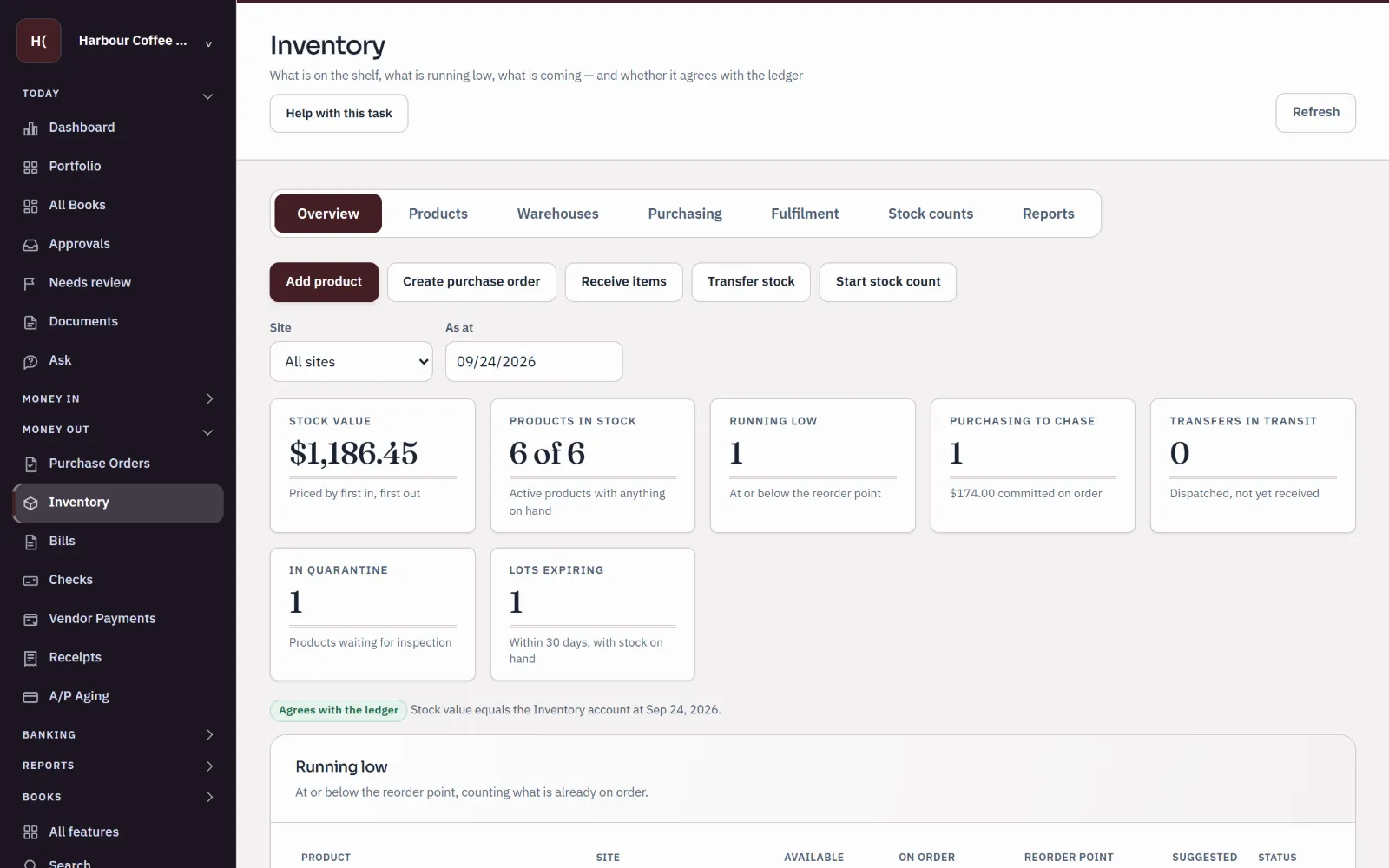
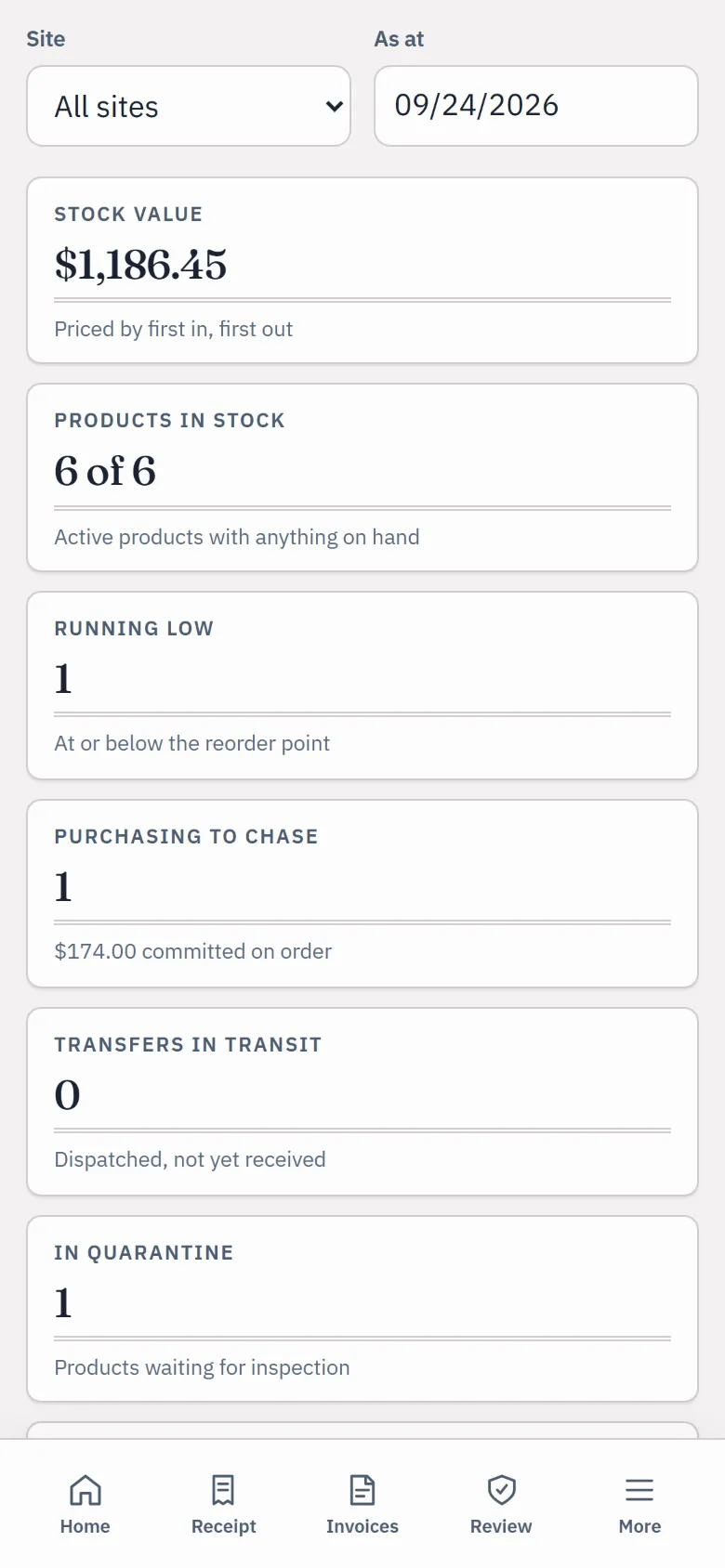
Sample inventory overview for Harbour Coffee Supply: stock value $1,186.45 priced first in, first out, one product running low, one purchase to chase, one item in quarantine, one lot expiring, and a badge saying stock agrees with the ledger.
Sample company · synthetic figures
The sample inventory overview on a phone: site and date filters, stock value $1,186.45 and products in stock.
Sample company · synthetic figures

Three questions, answered from the books

What expires, what is on hold, who has which lot.

  1. 01

    What expires first goes out first.

    Each lot carries its expiry date. The pick list suggests the lots that expire soonest, and a lot past its date can't be sold, set aside or picked.

  2. 02

    Held stock can't be sold.

    Put every unit of a lot on hold at once, or bring a return back into quarantine. It still counts as yours, but it can't be sold until someone releases it or scraps it.

  3. 03

    A recall list, from one lot.

    Trace a lot to see where it came from, every movement it made, and which customers have some.

Follow a lot

From the delivery door to the customer's invoice.

Real screens from Harbour Coffee Supply, a sample coffee and café supplier, and sample books for a bakery. Each step links to its guide.

Delivery · Receive with the lot

Every sack arrives with its lot and date

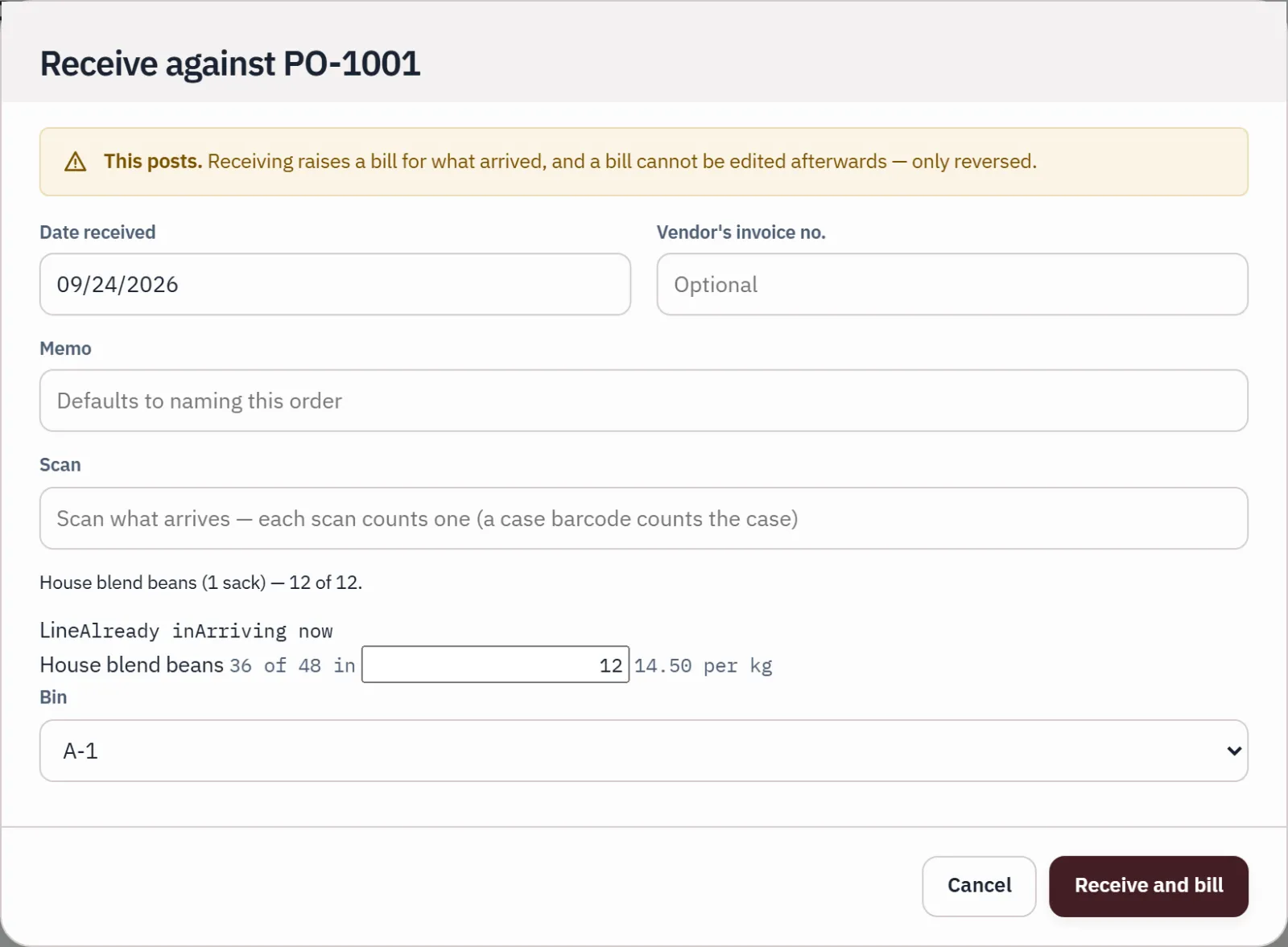
Receive the purchase order into its site and bin. A lot-tracked product asks for the lot number and expiry date as it arrives, weights can be counted to three decimal places, and receiving creates the supplier bill.

Run your stock
Receive
Receiving purchase order PO-1001: one scanned sack barcode counts 12 kg of beans arriving, and a banner says receiving creates the bill.
Sample company · synthetic figuresReceiving PO-1001: one scanned sack barcode counts 12 kg of beans, and receiving creates the bill.

Storage · Where it is, and in what state

On the shelf, on hold or on its way

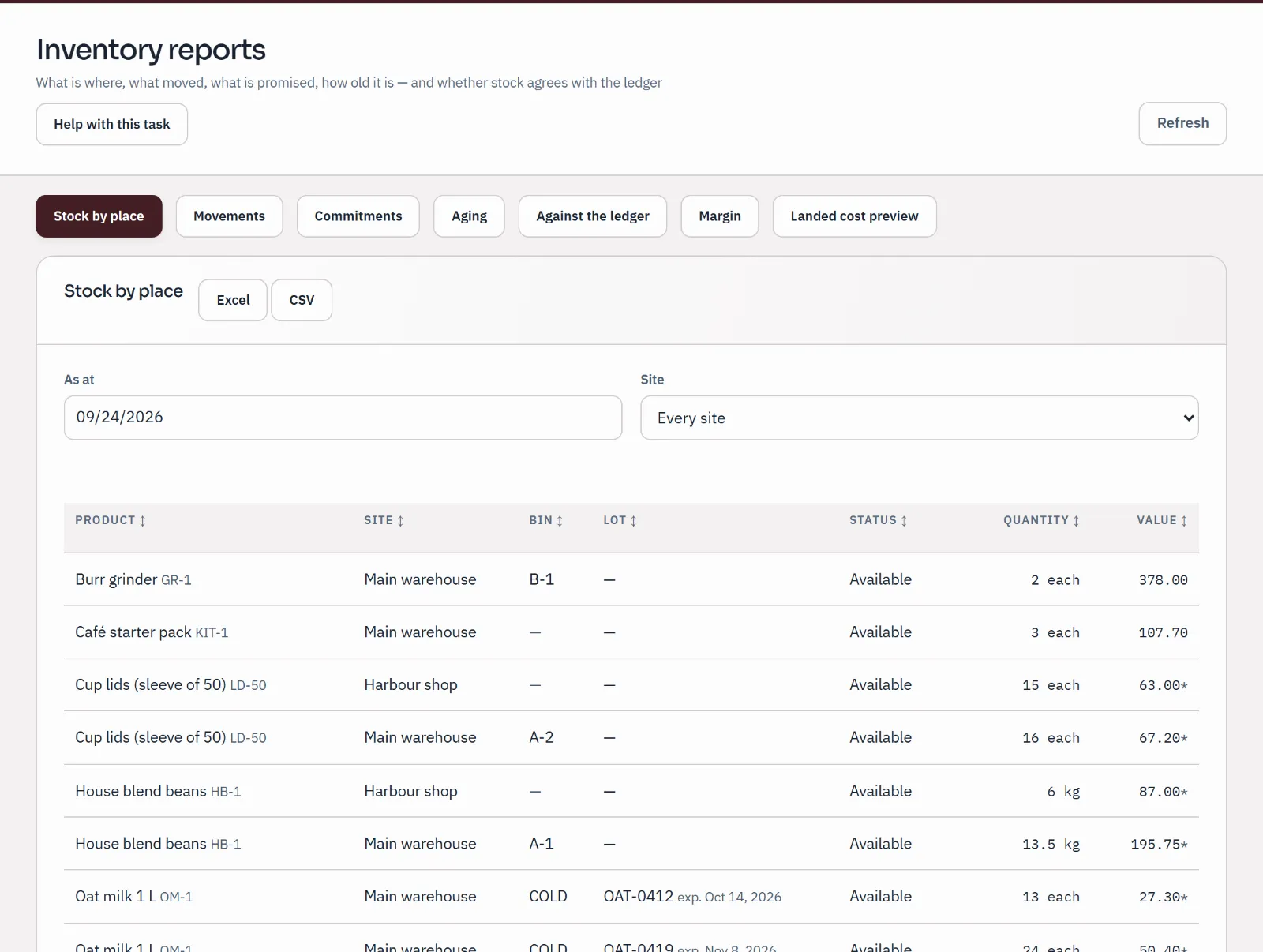
Stock by place lists every product by site, bin, lot and status, with its quantity and value. Returns can come back into quarantine and wait there until someone inspects them and chooses good to sell or scrap.

  • Bins for shelves, rows or a cold room
  • Hold a whole lot at once; nothing posts
  • An expiry date is a warning, never a write-off on its own
How stock works
Stock by place
Stock by place report: every product by site, bin, lot and status with quantity and value.
Sample company · synthetic figuresEvery product by site, bin, lot and status, with quantity and value.

Orders · Pick the right lot

The earliest date goes out first

Set stock aside for a customer's order, then pick it. The pick list suggests the lots that expire soonest first, and Dispatch and invoice creates the invoice, with the stock and its cost leaving at that moment.

Run your stock
Pick
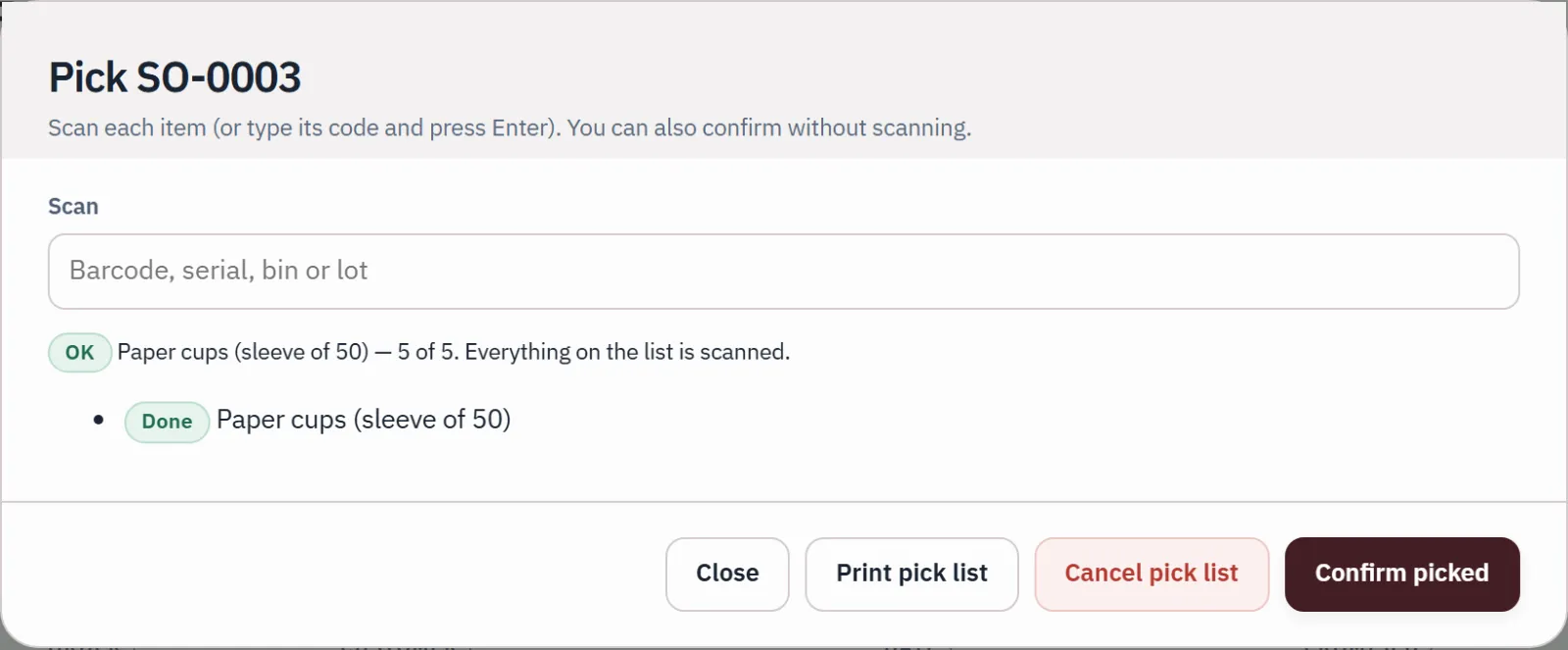
Picking sales order SO-0003 by scanning: five sleeves of paper cups scanned, the line marked Done.
Sample company · synthetic figuresPicking SO-0003 by scanning: five sleeves of paper cups, the line marked Done.

Paperwork · Bills and receipts

The supplier's bill, kept with its entry

Upload a supplier's bill or a photo of a receipt, then attach it to the transaction it belongs to. The books show which purchases still have no document, so you can find what is missing before your accountant asks.

See every feature
Documents
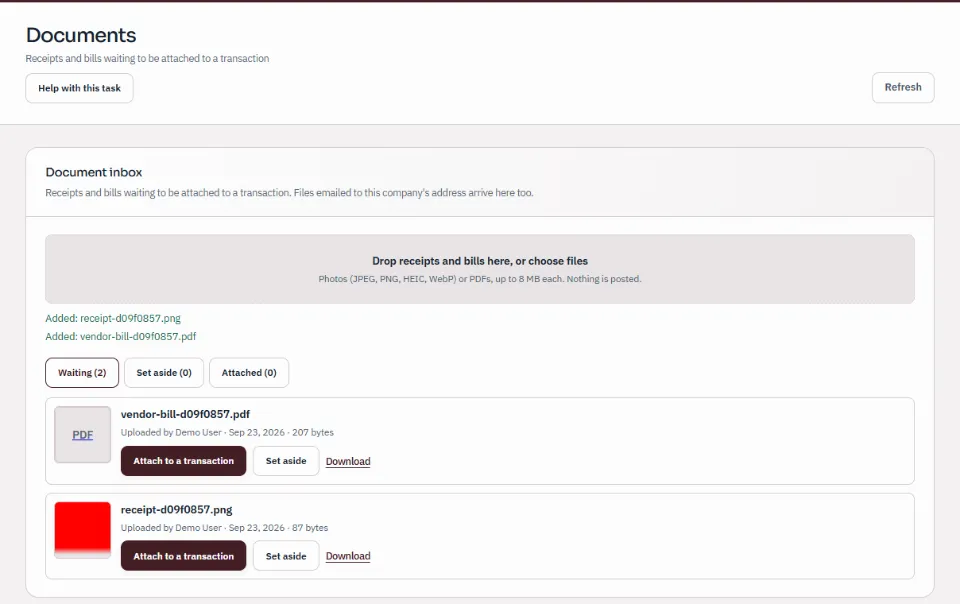
Documents inbox for sample books: a bill PDF and a receipt image waiting to be attached to a transaction, with Attach and Set aside actions.
Sample company · synthetic figuresA bill PDF and a receipt image waiting to be attached to their transactions.

Month-end · Count by lot

Count the cold room without the answers

Start a blind count for a site or some of its bins: counters see products, bins and lots, not what the books expect. Review the differences, apply them as one entry, and check stock value against the Inventory account.

Count your stock
Stock count
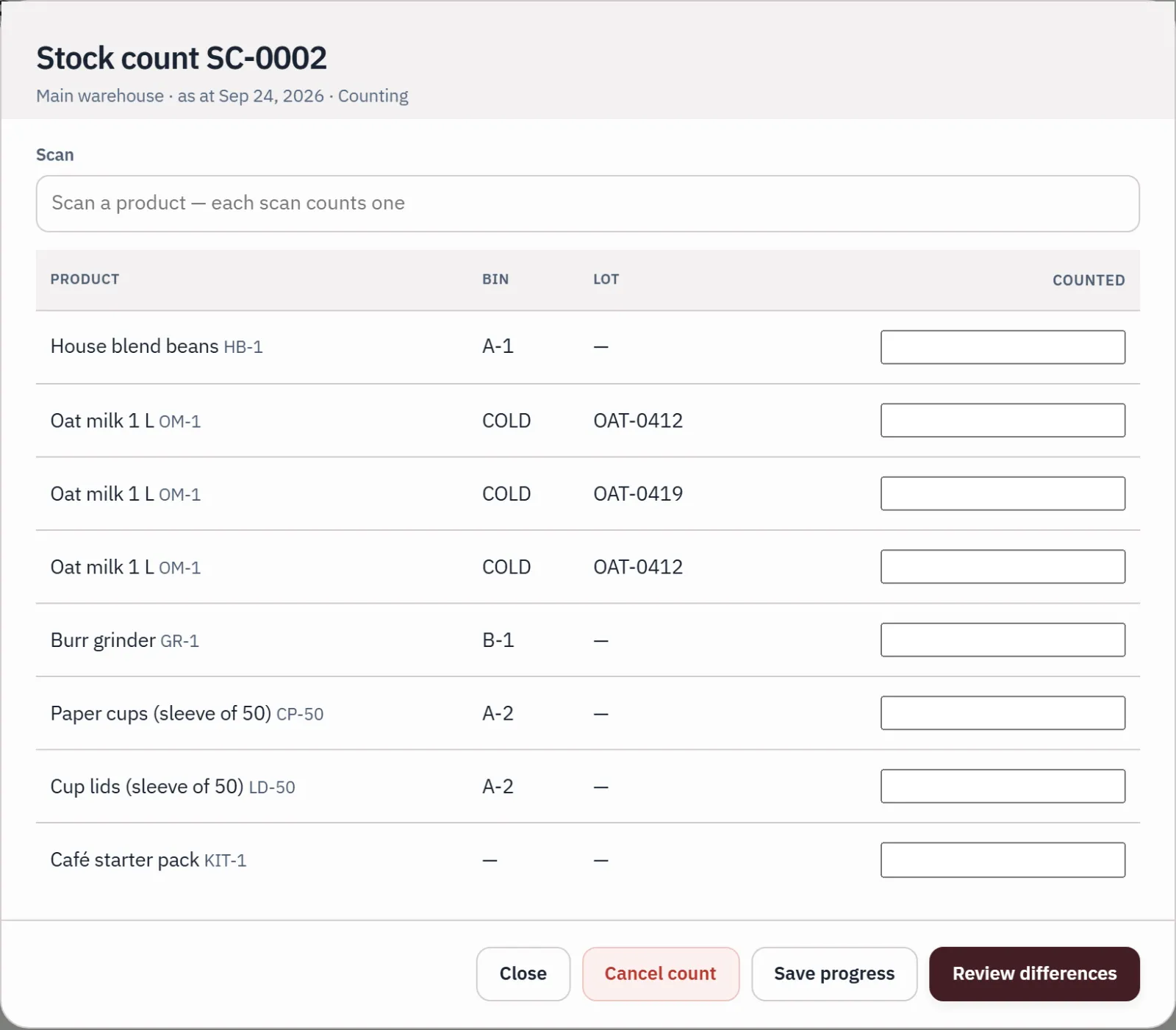
A blind stock count sheet for the main warehouse: products, bins and lots with a counted column, and no expected figures shown to the counter.
Sample company · synthetic figuresA blind count sheet: products, bins and lots, with no expected figures shown.

Made for batches

The rest of a food business, in the same books.

  • Simple recipes

    Say what one batch takes and how many it makes, and a build moves the ingredients' cost into the product. Ingredients tracked by lot can't go into a recipe yet.

  • Weights and cases

    Count in kg to three decimal places, or by the case, with other units converted exactly.

Recipes are simple builds: there is no work in progress, scheduling or labour costing, and ingredients or products tracked by lot or serial number can't be used in one yet. Qetaab keeps lot, expiry and movement records in your books; it isn't a food safety or compliance system.

Pricing

Lots and expiry dates in every plan.

Free includes inventory, a second person to approve counts and your accountant in the same books, with no card needed. Plus, at $10 a month, adds live bank feeds and AI.

  • Free Usually fits

    FreeNo card needed

    For a business owner, or an accountant and every client.

    Unlimited businesses and people. Your accountant included.

  • Plus

    $10 a monthor $100 a year

    Live bank feeds and AI for your business.

    Live bank accounts: 3 included. AI: 300 a month.

  • Practice

    $50 a monthor $500 a year

    Live bank feeds and AI across a practice and its clients.

    Live bank accounts: 25 included. AI: 3,000 a month.

Every limit and the payment terms

Paid checkout isn't open during the pilot.

Plain answers

What food and drink businesses ask us first.

Can I trace a lot for a recall?

Yes. Trace on a lot shows where it came from, every movement, and which customers have some. Hold puts every unit of that lot still on the shelf on hold at once, at every site; nothing posts, and each unit can later be released or scrapped.

What happens when a lot passes its expiry date?

Nothing changes on its own: an expiry date is a warning, not a write-off. A lot can go out up to and including its expiry date; after that it can't be sold, set aside or picked. Move it to quarantine for review, send it back to the supplier, or write it off.

Can I make products from ingredients?

Yes, as simple recipes: what one batch takes and how many it makes. A build moves the ingredients' cost into the product, and Take apart reverses it. Ingredients or products tracked by lot or serial number can't be used in a recipe yet.

Which sales tax rate applies to food?

That depends on where and how you sell, so confirm it with your tax authority or accountant. Qetaab lets you add standard, reduced and elevated rates, set a default for each customer, and change the rate on an invoice.